How Kandoras Are Made: Step-by-Step Emirati Kandora Tailoring Process
Complete guide to how kandoras are made – from fabric selection to final stitching. Discover the Emirati kandora tailoring process and what makes premium custom kandora making a true craft.
#HowKandorasAreMade
#KandoraTailoring
#EmiratiKandora
#KandoraManufacturing
#CustomKandora
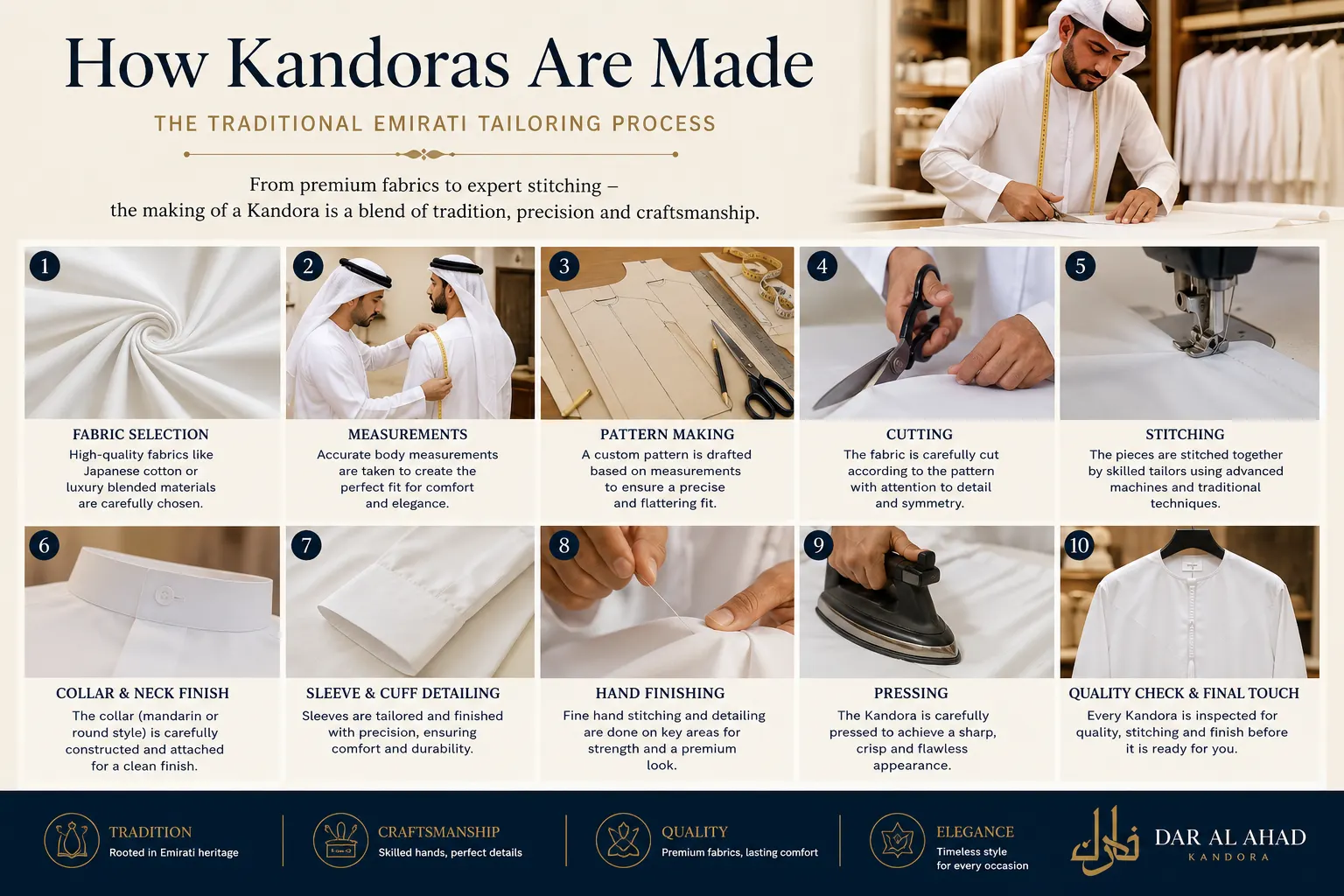
The Emirati kandora is more than just a garment – it's a symbol of national identity, cultural heritage, and timeless elegance. But how are kandoras made? The kandora making process is a blend of traditional craftsmanship and modern tailoring techniques that result in a garment of exceptional quality and comfort.
At Dar Al Ahad, we take pride in preserving the authentic traditional kandora craftsmanship while incorporating contemporary innovations. In this comprehensive guide, we'll walk you through the complete kandora manufacturing process, from fabric selection to the final finishing touches.
🇦🇪 The Emirati Kandora: A Cultural Masterpiece
Before diving into how kandoras are made, it's essential to understand their cultural significance. The kandora, also known as the kandura or dishdasha, has been the cornerstone of traditional UAE clothing for centuries. It represents the values of modesty, equality, and national pride that define the Emirati national dress.
The pristine white color of the traditional kandora reflects the region's harsh sunlight and symbolizes purity and simplicity. Over time, the Emirati kandora has evolved from a purely functional garment into a fashion statement worn by royals, businessmen, and youth alike, showcasing the rich Emirati fashion heritage.
🧵 Step 1: Premium Fabric Selection – The Foundation of Quality
The kandora fabric selection is the most critical step in the kandora making process. The quality of the fabric determines the comfort, durability, and overall appearance of the finished garment. Premium kandora tailoring begins with choosing the right material.
Toyobo
Ultra-lightweight Japanese fabric, cool & crisp – ideal for UAE summers.
Shikibo
Premium texture with excellent drape & minimal ironing requirements.
Egyptian Cotton
Classic breathable softness perfect for daily wear and comfort.
Swiss Voile
Sheer lightness with maximum air circulation for extreme heat.
What Fabric Is Used for Kandoras?
The most common kandora fabric types include:
- Toyobo: A Japanese polyester-cotton blend that's lightweight, breathable, and wrinkle-resistant
- Shikibo: Premium Japanese fabric with superior drape and comfort
- Egyptian Cotton: High-quality cotton known for its softness and breathability
- Swiss Voile: Lightweight, semi-sheer fabric ideal for hot climates
At Dar Al Ahad, we source only the finest fabrics to ensure your custom kandora meets the highest standards of luxury menswear.
📏 Step 2: Precision Measurements – The Key to Perfect Fit
How do tailors measure a kandora? The measurement process is the foundation of bespoke tailoring and custom fitted kandora creation. Professional tailors take over 15 precise measurements to ensure the garment fits perfectly.
Key Measurements for Kandora Tailoring
- Shoulder width – determines the drape of the fabric
- Chest circumference – ensures comfortable movement
- Waist measurement – affects the overall silhouette
- Arm length – from shoulder to wrist for proper sleeve length
- Kandora length – from shoulder to ankle for the traditional look
- Neck circumference – for the collar (qabba) fit
- Shoulder slope – ensures the garment hangs naturally
The garment construction process relies heavily on accurate measurements to create a handcrafted clothing piece that feels like a second skin.
✂️ Step 3: Pattern Making and Fabric Cutting
Once measurements are taken, the kandora cutting process begins. This involves creating a pattern that serves as a template for cutting the fabric. The fabric cutting process requires precision and expertise to ensure the garment drapes correctly.
The Cutting Process
- Pattern creation: A paper pattern is made based on the client's measurements
- Fabric laying: The fabric is laid flat and smoothed to remove wrinkles
- Marking: The pattern is placed on the fabric and marked with chalk
- Cutting: Professional tailors cut the fabric with precision shears
- Organizing: All pieces are organized for the kandora stitching process
How much fabric is needed for a kandora? Typically, 5-6 meters of fabric are required for a standard kandora, though this can vary based on height and build.
🪡 Step 4: The Kandora Stitching Process – Where Craftsmanship Shines
The kandora stitching process is where the garment truly comes to life. This is the heart of the kandora production process, where skilled tailors transform cut fabric into a finished garment.
Are kandoras handmade? Yes, premium kandoras are predominantly handcrafted by experienced tailors who have honed their skills over years of practice. At Dar Al Ahad, our master tailors use both traditional techniques and modern equipment to achieve the perfect balance of quality and efficiency.
The Stitching Sequence
- Shoulder seams: The first seams to be joined, establishing the garment's structure
- Side seams: Connecting the front and back panels
- Sleeve attachment: Precision placement for natural arm movement
- Collar (Qabba) construction: The distinctive standing collar of the Emirati kandora
- Front opening: Creating the traditional front slit with button or clasp
- Hem finishing: Ensuring clean, durable edges
- Final assembly: All pieces are joined together
✅ Step 5: Quality Control and Finishing Touches
The final stage of how a custom kandora is tailored involves rigorous quality control and finishing touches. This ensures the garment meets the highest standards of premium stitching and textile craftsmanship.
Quality Control Checklist
- Seam inspection: Checking for any loose threads or uneven stitching
- Fit check: The garment is fitted to ensure perfect proportions
- Fabric quality: Final inspection of the kandora fabric for any defects
- Button and clasp security: Ensuring all fastenings are properly attached
- Pressing and ironing: Professional pressing for a crisp, polished appearance
- Final packaging: Careful folding and packaging for delivery
⏱️ How Long Does It Take to Make a Kandora?
How long does it take to make a kandora? The kandora production process typically takes 5-7 business days for custom orders. However, the timeline can vary based on several factors:
- Complexity of design: Embroidered or detailed kandoras may take longer
- Fabric availability: Premium fabrics like Toyobo or Shikibo may have lead times
- Tailor workload: High-demand periods may affect turnaround time
- Number of fittings: Multiple fittings may be required for perfect fit
At Dar Al Ahad, we prioritize both quality and efficiency, ensuring your custom kandora making experience is seamless and timely.
🏛️ Modern vs Traditional Kandora Manufacturing
The traditional kandora manufacturing process has evolved significantly over the years. While the core techniques remain rooted in tradition, modern innovations have enhanced the kandora production process.
Traditional
Hand-sewn, natural fabrics, time-honored techniques, personalized service.
Modern
Precision machinery, innovative synthetic blends, efficient production with consistent quality.
At Dar Al Ahad, we bridge the gap between tradition and modernity. While we respect the traditional kandora craftsmanship, we leverage modern tailoring techniques and advanced fabric technologies to deliver superior luxury menswear.
👔 Why Choose Professional Kandora Tailoring in Dubai?
Who makes kandoras in Dubai? Professional tailors and ateliers like Dar Al Ahad specialize in kandora tailoring in Dubai and across the UAE. Here's why professional bespoke tailoring is essential:
- Perfect fit: Custom measurements ensure the garment fits perfectly
- Quality materials: Access to premium fabrics like Toyobo and Shikibo
- Expert craftsmanship: Years of experience in garment construction
- Attention to detail: Every stitch is carefully executed
- Style guidance: Professional advice on fabrics, colors, and styles
- Longevity: Well-made kandoras last for years
People Also Ask About Kandora Making
- How are kandoras made? – Through a multi-step process including fabric selection, measurements, cutting, stitching, and finishing.
- What fabric is used for kandoras? – Toyobo, Shikibo, Egyptian cotton, and Swiss voile are most common.
- How long does it take to tailor a kandora? – Typically 5-7 business days for custom orders.
- Are kandoras handmade? – Premium kandoras are predominantly handcrafted by skilled tailors.
- How much fabric is needed for a kandora? – Approximately 5-6 meters, depending on height.
- Who makes kandoras in Dubai? – Dar Al Ahad and other professional tailoring ateliers.
- How do tailors measure a kandora? – Over 15 precise measurements from shoulder to ankle.
- What makes a high quality kandora? – Premium fabric, expert stitching, and perfect fit.
- Why are kandoras usually white? – Reflects sunlight, symbolizes purity and equality.
- What is the difference between Emirati and Saudi kandora? – Emirati kandora has a standing collar (qabba) and simpler design.
❓ Frequently Asked Questions About Kandora Making
Traditional Emirati kandoras are made through a meticulous process that includes premium fabric selection, precise measurements, pattern cutting, expert stitching, and quality control. The process takes 5-7 business days and requires skilled craftsmanship.
The kandora making process involves: 1) Fabric selection (Toyobo, Shikibo, etc.), 2) Taking over 15 precise measurements, 3) Creating patterns and cutting fabric, 4) Stitching and assembly, 5) Quality control and finishing touches.
Toyobo and Shikibo are premium choices for UAE summers, offering superior breathability and drape. Egyptian cotton is excellent for daily wear, while Swiss voile provides maximum air circulation in extreme heat.
Custom kandora tailoring typically takes 5-7 business days. This includes fabric selection, measurements, cutting, stitching, and quality control. Rush orders may be available for an additional fee.
Premium kandoras are predominantly handmade by skilled tailors who use a combination of traditional techniques and modern equipment. While some parts may be machine-stitched for efficiency, the most critical details are handcrafted for superior quality.
Dar Al Ahad in Sharjah offers premium custom kandora tailoring with delivery across all UAE emirates including Dubai, Abu Dhabi, and Ajman. We also offer virtual consultations for remote clients.
A high-quality kandora is defined by premium fabric selection, expert tailoring, precise measurements, clean stitching, proper drape, and attention to detail. The garment should feel comfortable, look crisp, and maintain its shape after repeated wear.
Experience Premium Kandora Tailoring
✔️ Premium Toyobo & Shikibo fabrics
✔️ Expert bespoke tailoring
✔️ Free delivery across UAE